Organization
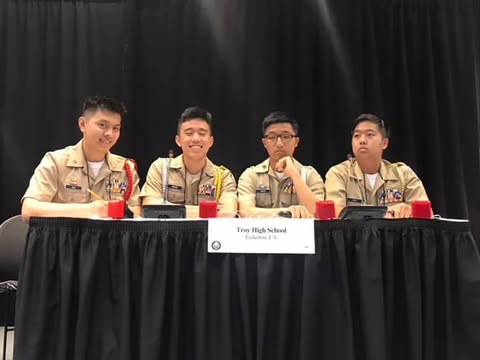
Troy High School NJROTC
Category
Community
Type
Software
Year
2024
Location
Fullerton, California, USA
Status
Completed
Focus
AI tooling, Knowledge systems, Study infrastructure
20,000+
Flashcards
Developed an AI-assisted knowledge database converting NJROTC textbooks into 20,000+ spaced-repetition flashcards and searchable academic study infrastructure.
Project Overview
Project Name
Brain Brawl GPT — NJROTC Academic Knowledge System
Organization Background
The NJROTC Academic Competition requires cadets to demonstrate mastery across multiple domains including naval science, geography, military history, science, and current events. Competitive teams must absorb large volumes of information from the NS1–NS4 Naval Science curriculum while balancing regular academic coursework.
Traditional study methods often struggle to efficiently organize and retain this volume of knowledge.
Objective
Develop a structured knowledge system that converts the NJROTC academic curriculum into a searchable database and spaced-repetition learning environment to accelerate retention, reinforce conceptual connections, and support competition-level preparation.
Scope
• Convert NJROTC academic textbooks (NS1–NS4) into structured digital study material
• Develop a database containing over 20,000 interconnected knowledge entries
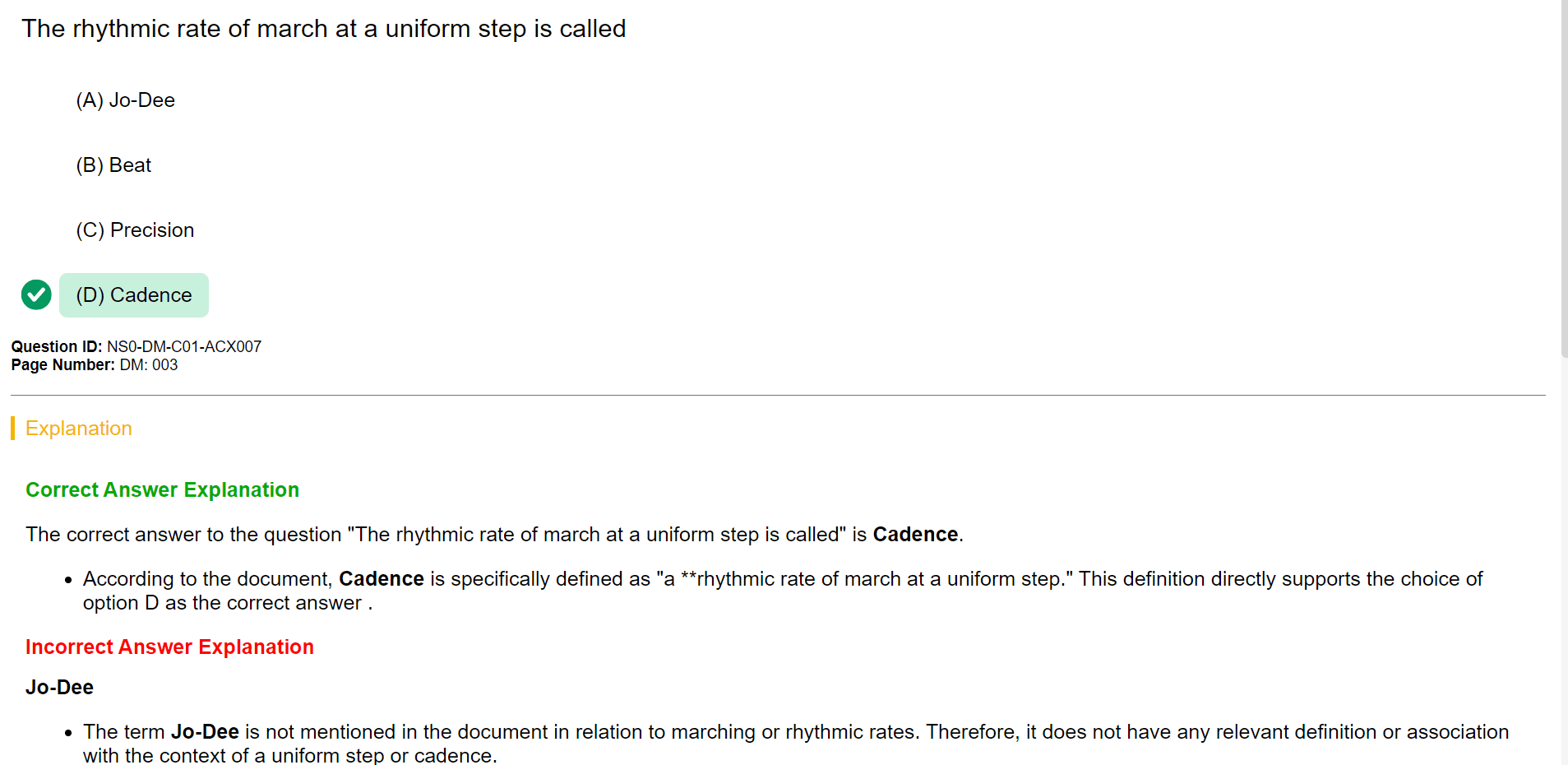
• Implement spaced-repetition learning using the Anki platform
• Create searchable knowledge architecture linking concepts across multiple subject areas
• Support cadets preparing for regional and national NJROTC academic competitions
Key Details
Database Size
20,000+ flashcards and knowledge entries
Core Sources
• Naval Science 1
• Naval Science 2
• Naval Science 3
• Naval Science 4
Platform
• Anki spaced repetition learning system
• AI-assisted content extraction and organization
Operational Goal
Transform static textbooks into an interactive knowledge system optimized for efficient learning and long-term retention.
Design Approach and Execution
Concept and Vision
Knowledge Engineering Philosophy
The project aimed to transform traditional static study materials into a structured knowledge system capable of accelerating learning and long-term retention.
Rather than relying on passive reading, the system used spaced-repetition learning principles to repeatedly expose cadets to important concepts at scientifically optimized intervals. This method allows students to retain large amounts of information while reducing total study time.
By structuring the NJROTC academic curriculum into a searchable and interconnected database, cadets could study more efficiently while balancing academic responsibilities in school.
Educational Design Principles
Spaced Repetition Learning
Utilized Anki’s spaced repetition algorithm to optimize long-term memory retention.
Knowledge Compression
Converted large textbook sections into concise, testable knowledge units.
Conceptual Linking
Connected related concepts across multiple subjects to reinforce deeper understanding.
Scalable Study Infrastructure
Designed the system to support large cadet teams preparing for high-level academic competitions.
Execution
Phase 1 — Source Material Extraction
Extracted academic content from the Naval Science curriculum across all four course levels.
The material was systematically analyzed and converted into structured knowledge entries capable of being transformed into flashcards and searchable notes.
Phase 2 — Knowledge Database Construction
Developed a large-scale study database containing over 20,000 individual flashcards and knowledge elements.
Each card was designed to target specific concepts, facts, or relationships within the curriculum, allowing cadets to review material efficiently.
The database architecture also allowed connections between related subjects, enabling deeper conceptual learning.
Phase 3 — AI-Assisted Knowledge Compression
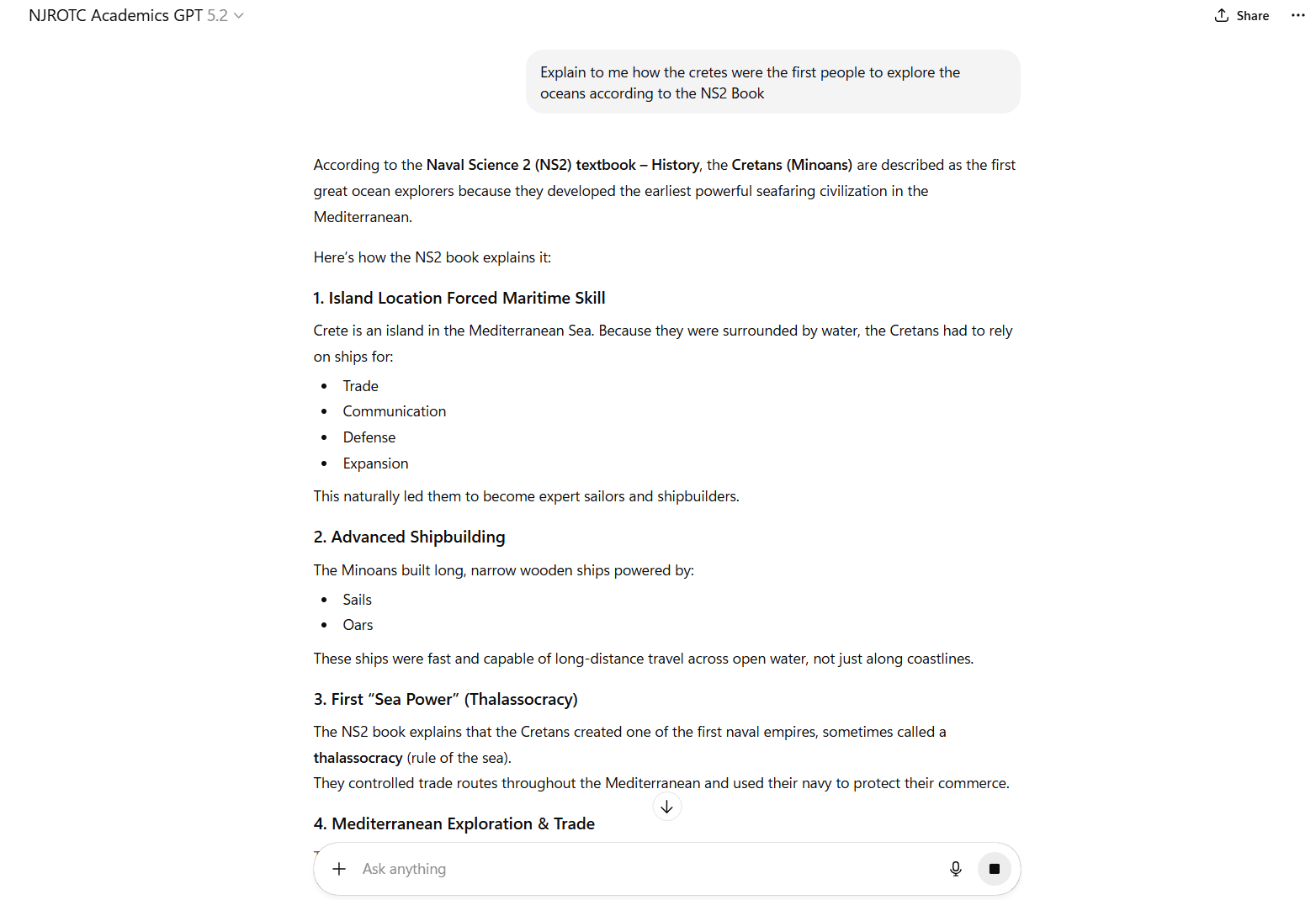
AI tools were used to help extract, summarize, and organize information from source materials.
This allowed large volumes of educational content to be compressed into structured knowledge entries that could be quickly reviewed and retained by students.
The resulting database functioned as both a flashcard system and a searchable academic knowledge repository.
Phase 4 — Academic Competition Preparation
The system was deployed as a training resource for NJROTC academic teams preparing for competitive events.
Cadets used the database to systematically review key concepts across the curriculum while maintaining balanced academic workloads.
The spaced repetition system enabled consistent knowledge reinforcement without requiring excessive study time.
Results and Outcome
Outcome
Large-Scale Knowledge System
Developed a database containing over 20,000 structured academic knowledge entries derived from NJROTC curriculum materials.
Accelerated Learning Efficiency
Implemented spaced repetition learning methods allowing cadets to retain large volumes of information with reduced study time.
Competition Performance Support
The system contributed to NJROTC academic teams achieving multiple national-level placements and record-breaking competition scores.
Scalable Training Infrastructure
Created a digital knowledge architecture capable of supporting long-term academic training for large cadet teams.
Credits and Collaboration
Developer
Thienan Bui
Organization
Troy High School NJROTC Academic Program
Educational Framework
• Naval Science Curriculum (NS1–NS4)
• Spaced Repetition Learning Systems
• AI-assisted knowledge extraction and structuring
Gallery
More Projects
Continue exploring related work.

No eligible item
No eligible item